
What’s the Skinny on Decanting Wine?
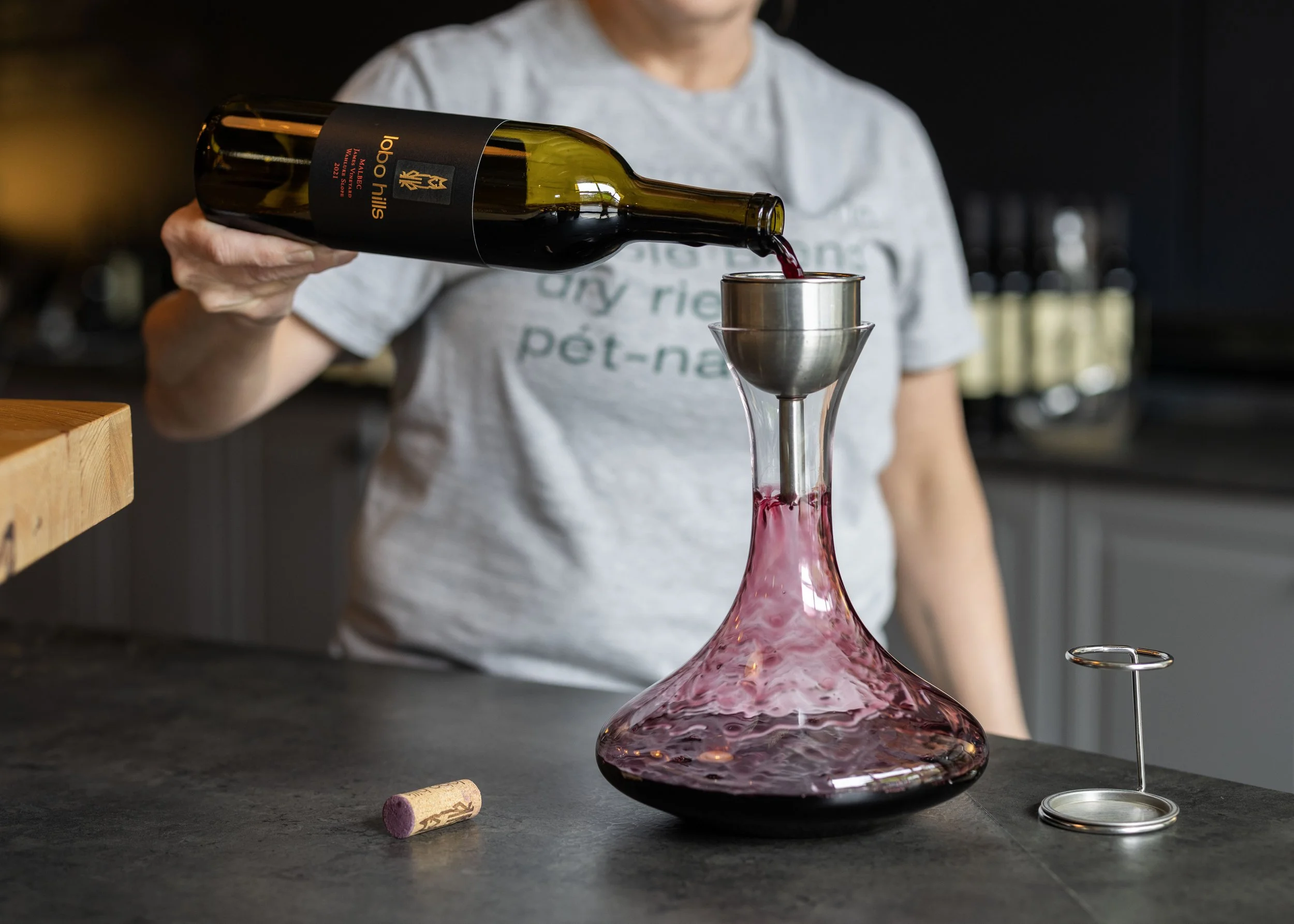
What does decanting wine conjure up in our minds? Fancy decanters. Cool, expensive gadgets. Decanting wine doesn’t have to be fancy or expensive. In short, it’s about using simple techniques, with basic tools, in order to elevate the wine's flavor and body. I might compare it to whipping air into egg whites to make a stiff meringue.
But how to get there is what stumps many of us. I’m going to share what we do at our Lobo Hill’s tasting room that can help take a bit of mystery out of the process. Our techniques might raise an eyebrow or two, but they are simple, and they work for both reds and white wines (yes, whites can sometimes taste better with a little decanting!).
Drop me a note and tell me…does it work, or is it all a bunch of malarky?
Diana
What do we mean when we say “decanting”?
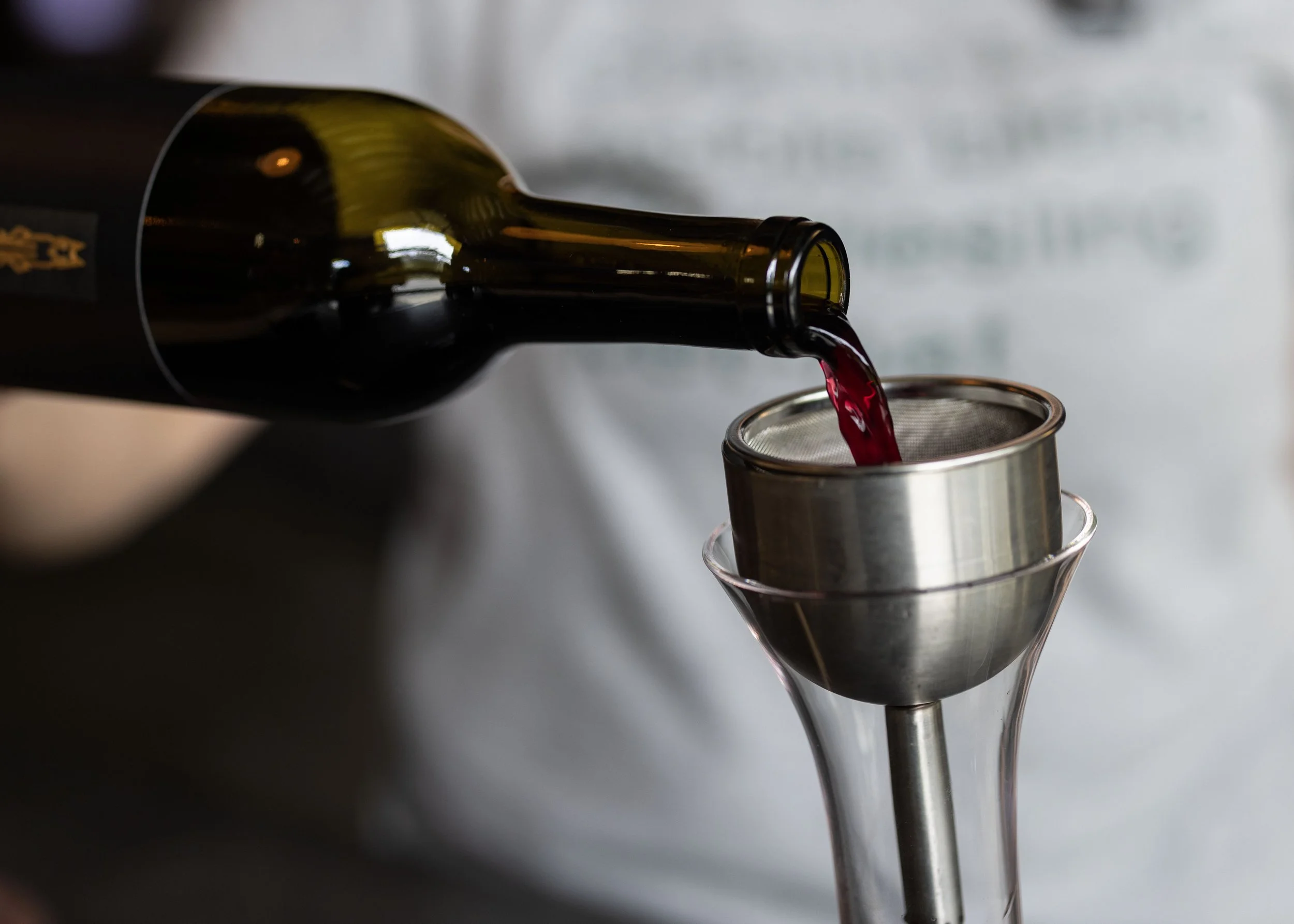
Very simply, it’s the act of adding oxygen to the wine through various techniques or tools. With the “right” amount of oxygen, flavors and aromatics are enhanced, which heightens your tasting experience. Decanting also allows you to separate wine from its sediment, soften or mellow the wine, and allow the “bouquet” to develop by dissipating “off” smells.
One note about what I just said. Oxygen can be added into wine through various tools, but nothing beats the simple act of time…time you allow the bottle to sit open, without forcing air into it. Exposing wine to air, with time, can open up the wine better than any fancy gadget or shortcuts (that I’m about to teach you!).
With that said, there’s plenty of reason to use short cuts because, well, we don’t have time to wait around, we want to drink the wine the moment we decide to open it up.
The Nose Knows!
Not all wines need decanting. So what determines the need to decant? Is it age? Is it the type of varietal? We believe the nose knows. That means, we don’t use a cookie-cutter approach to decanting, we let our noses determine when a wine needs oxygen to open up. And that applies to both white and red wines.
Quick tip. Did you know that we taste with our nose? The nose leads us to tasting all the bits of flavor you pick up in wine and foods. Therefore, when you decide to decant a wine, honing your sense of smell will help you quickly decide if a wine needs decanting, or not.
Honing Your Nose.

Yes, smelling a wine is key to determining whether it needs decanting, and teaching your nose to detect if decanting is necessary takes smelling many wines over time. With that said, let’s see if we can train your nose with some simple techniques.
Step 1: Crack open your wine. Pour a small amount, 1-2 ounces, into a glass.
Step 2: DON’T swirl it. Just smell it. Get your nose deep into the glass (glass shape can impact how you pick up flavors…but that's another blog topic for later!). Do you pick up anything, good or funky? If you don’t, try swirling it a few times, then smell again (swirling is not decanting…just so you know).
Now, what do you pick up? Are you picking up any fruit smells, or even or even something unexpected like tobacco or hay? But, don’t feel pressured to name them, just see if you can pick up something. If you are picking up lots of aromas, go ahead and taste it. If you're finding flavors coming through, decanting is likely not needed.
But, if you taste the wine and you still don’t pick up any flavors, but instead you get mostly dryness or acidity (that tingly feeling on the sides of your tongue), then this wine just might be a candidate for decanting. Especially if you have to smell and taste several times and you just don’t pick up much of anything.
Decanting Tip 1: don’t eat food before you taste the wine, especially foods with salt, and don’t decant a wine before you’ve tasted it.
To Start: The Quick Decant.
Okay, so now you’re ready to decant. You might be wondering what kind of decanting vessel to use. Well, we feel fancy decanters make nice impressions, but are not necessary. You can use a water pitcher or anything you can pour the wine into that can expose the wine to air. If you want to go fancy, the photo below shows the type of decanters we use in the tasting room. Shapes of decanters matter to how fast a wine opens up.
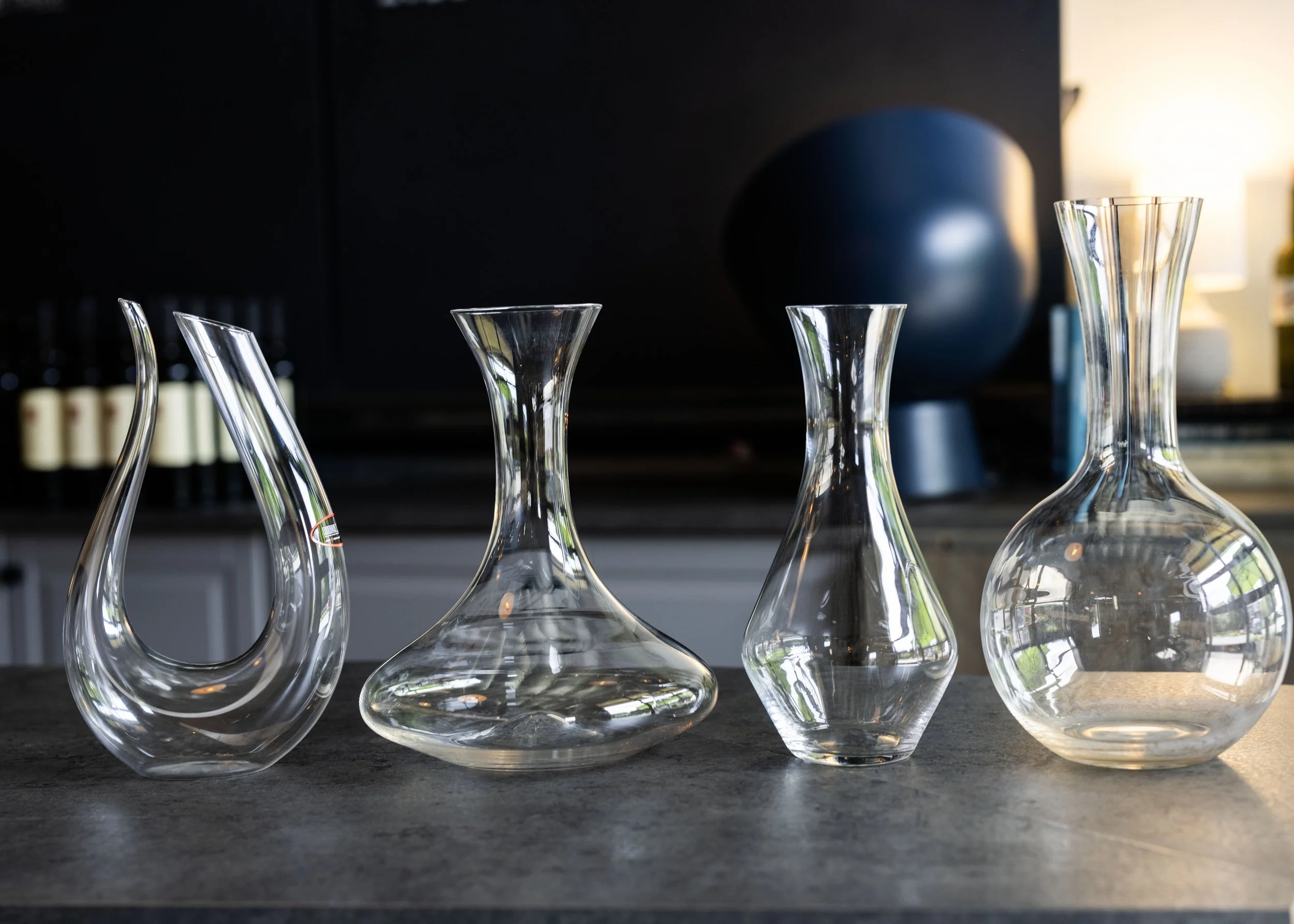
Decanting tip 2: A wine will decant faster the larger the base of the decanter. The wider bottom means the more wine is exposed to oxygen, and might decant a little faster, so be careful not to over decant if you have a vessel like this.
Now that you have your wine in a decanting vessel, we recommend, to avoid over decanting the wine, that you do a 10 minute quick decant test. At the 10 minute mark, pour a small amount in a glass, smell and taste. See if it’s “opened up,” meaning you’re now starting to taste and smell flavors. If you are satisfied with what you're tasting, then pour back in the bottle If you’re still not picking up aromas and flavors then let it sit for another 10 minutes. And repeat the 10 minute cycles until you’re liking what you taste.
How do you avoid over decanting a wine? Stick to the 10 minute intervals. If you over-decant wine you’ll lose both aromas and flavors that won’t come back.
Remember, this is all about what you like. There’s no right finish to the decanting process, only that which you enjoy.
Got Sediment in Your Wine?
Some wines, generally reds, may have what looks like sludge or thick particles that hover at the base or neck of the wine bottle. Though drinking this won’t hurt you, it does tend to turn some people off when it hits their mouth.
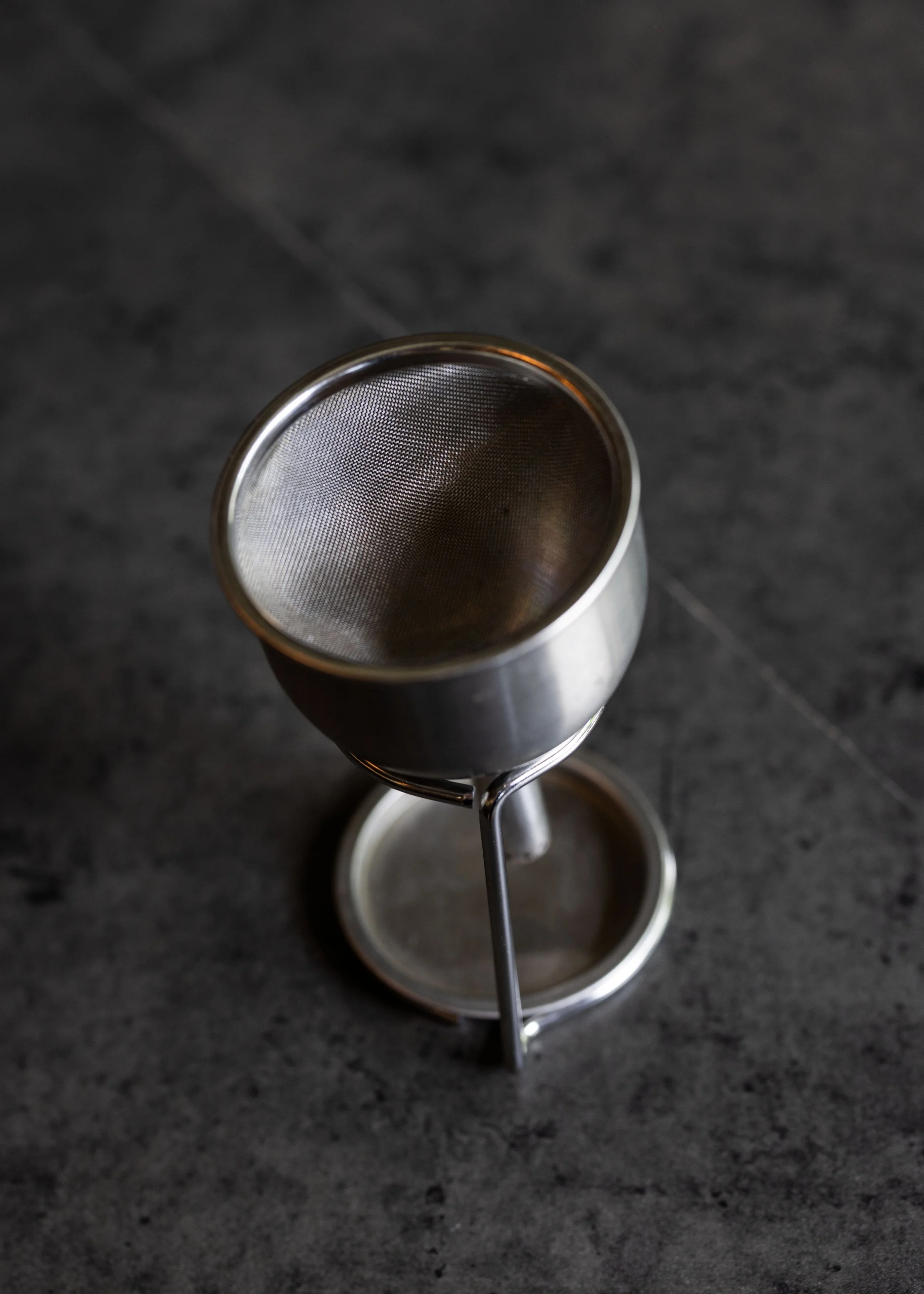
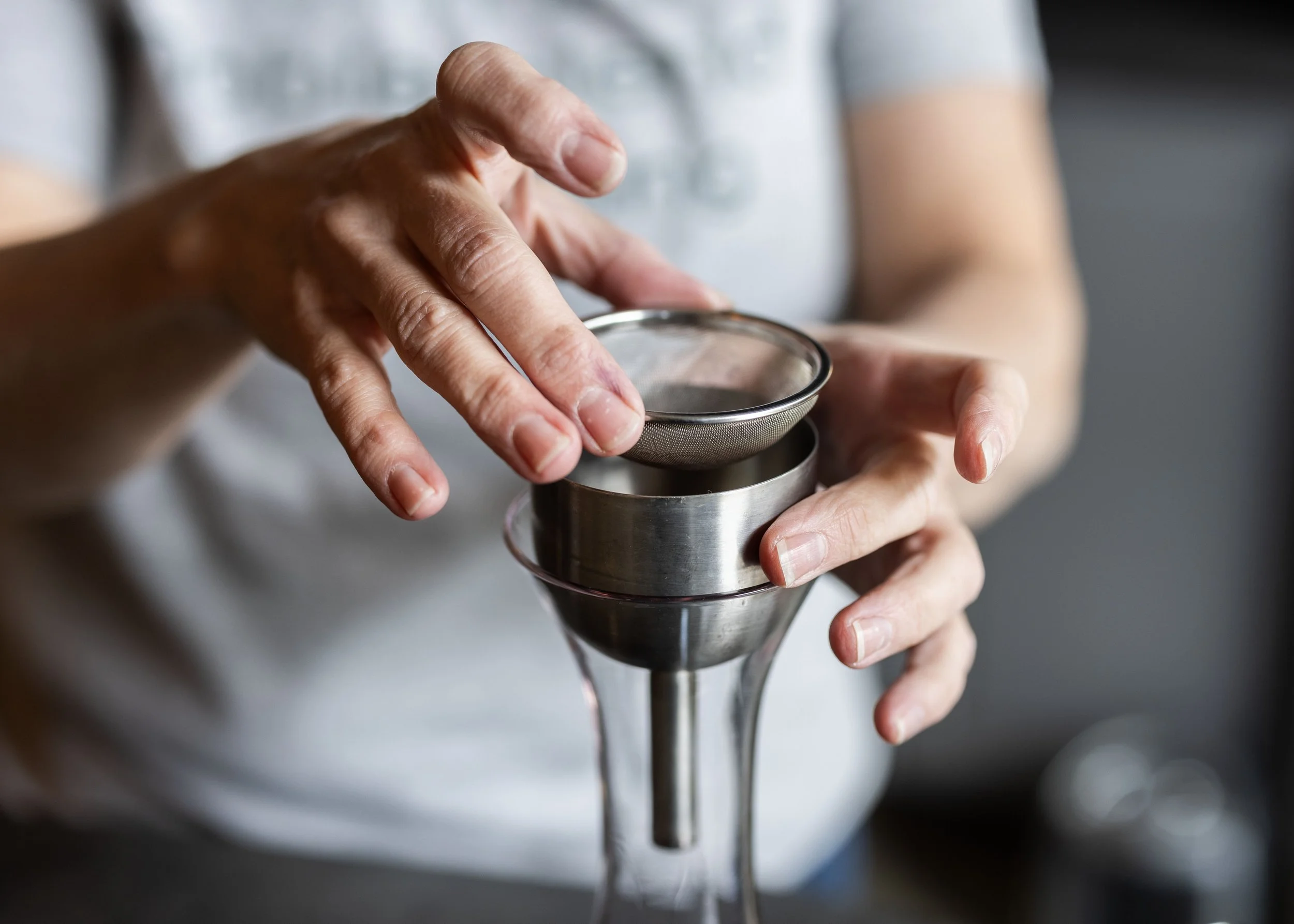
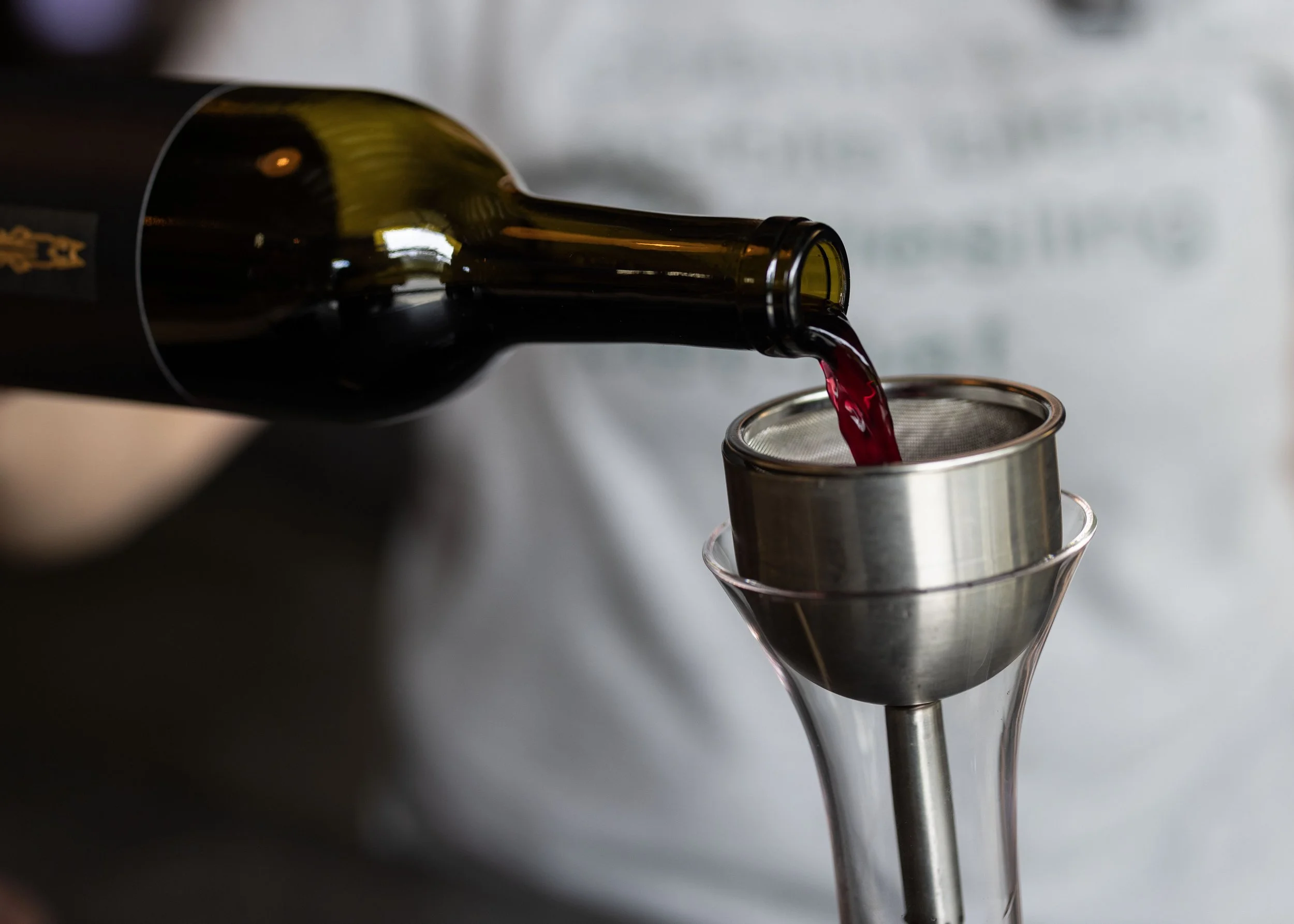
To take that sediment out you can get a fancy funnel like you see in the photo, which you can use as part of your decanting process. Pour into the funnel right into the vessel you’re using to decant.
Other Simple Decant Techniques.
So what if you want to just have a glass and don’t want to decant the whole bottle. Or have a bottle that was opened but you didn’t finish. Well we got you covered there. Below are two techniques that we do often in the tasting room. And believe us, they work!
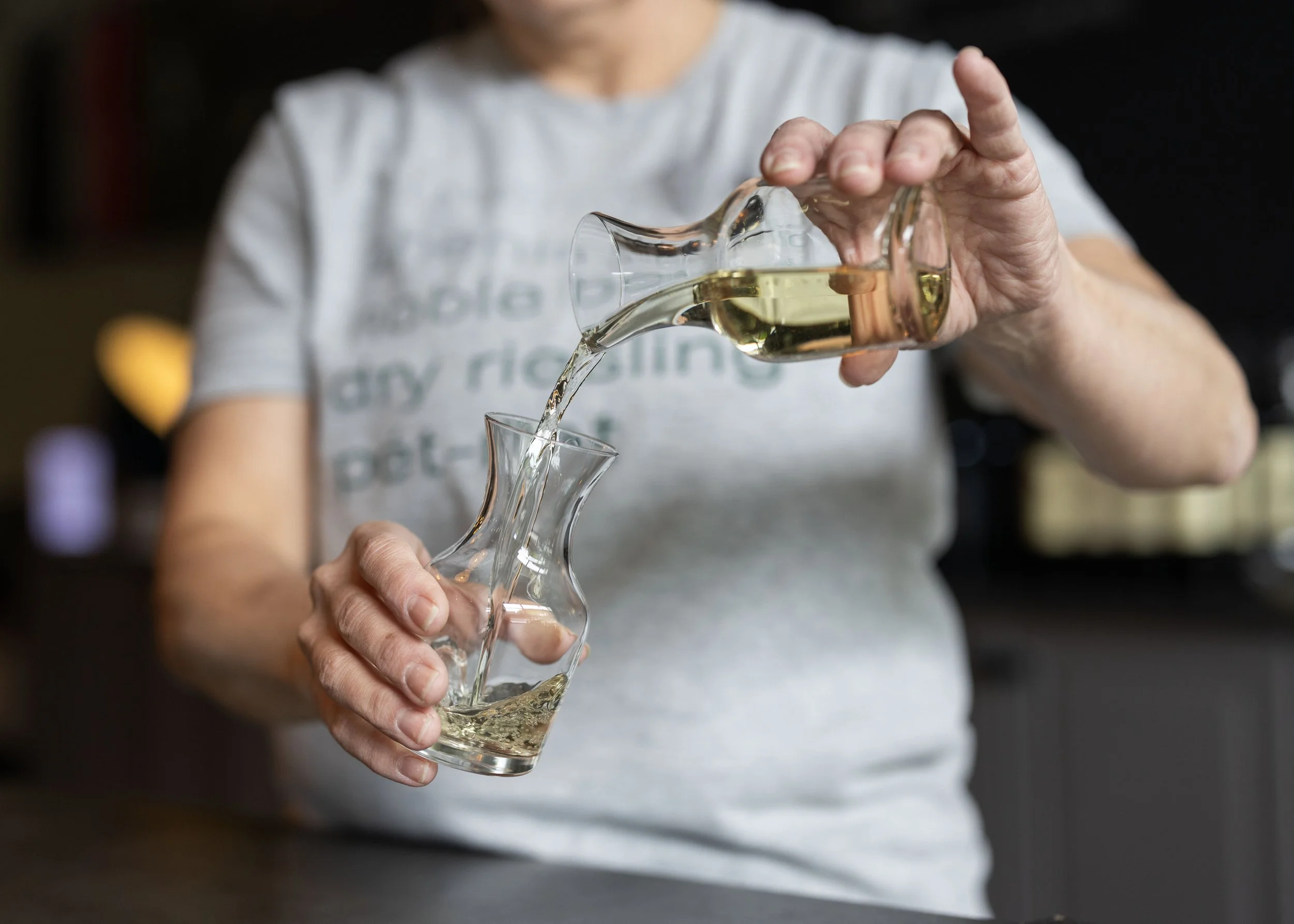
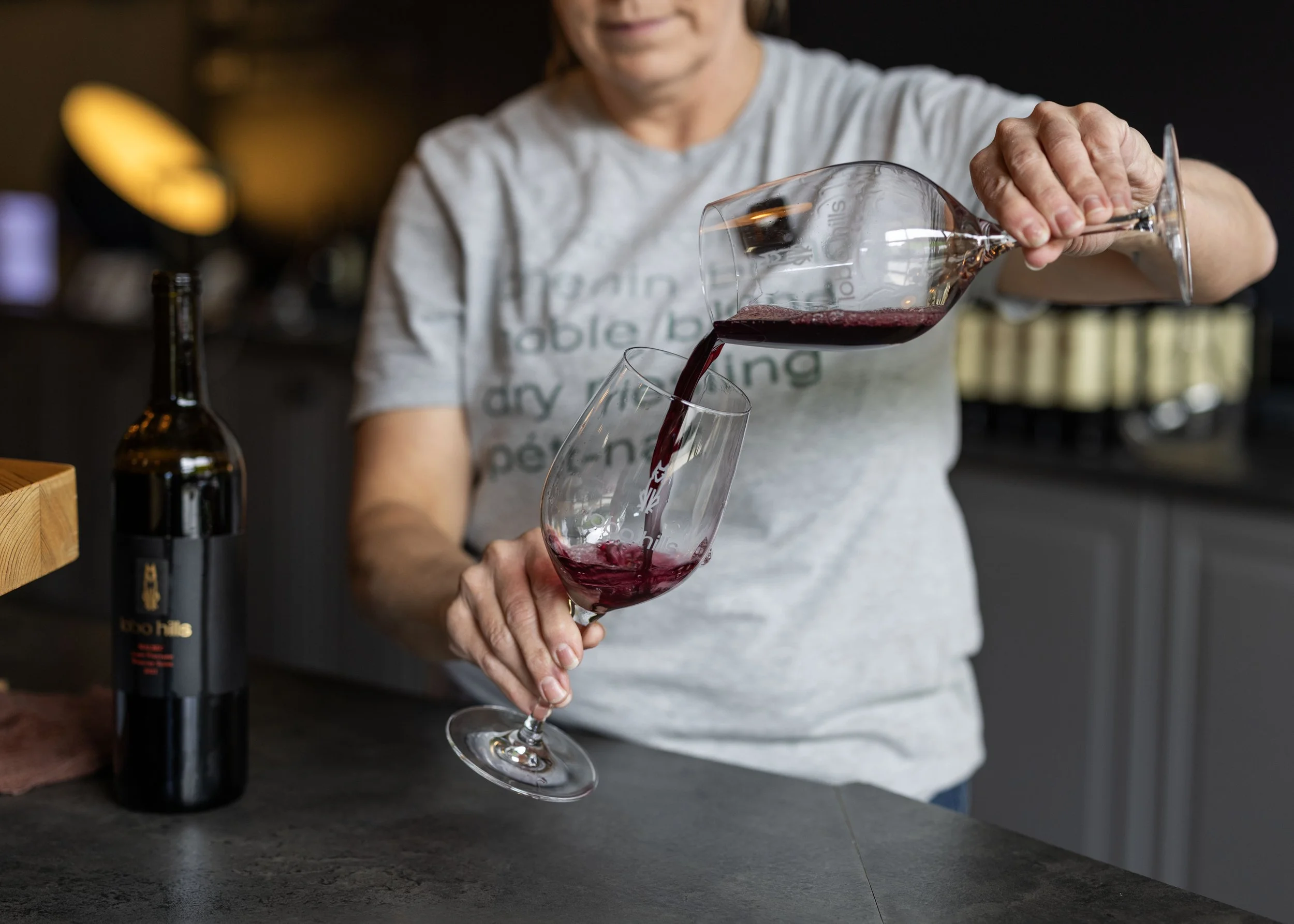
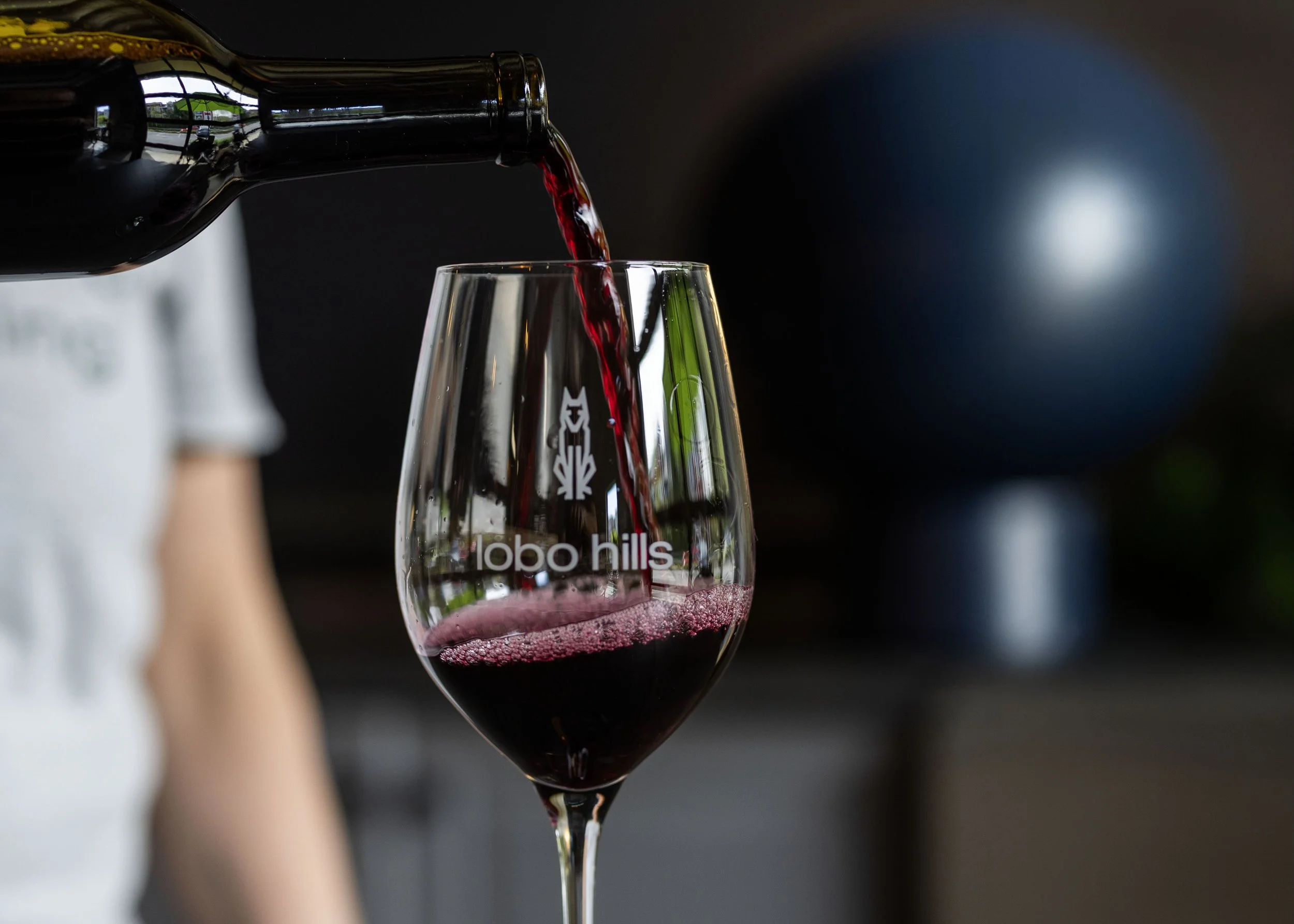
THE BACK AND FORTH SHUFFLE - take two small carafes (see photos), or two wine glasses, and pour wine back and forth, vigorously maybe 3-4 times, using as much speed as you can manage without losing precious drops of juice. What do we mean by quick, you ask? Below you’ll see how Kim transfers wine from a small carafe, raising each carafe as high as she can without spilling. Doing this multiple times, back and forth until there’s a nice head of foam on top of the wine. This foam essentially carries oxygen, and will infuse that oxygen into the wine.
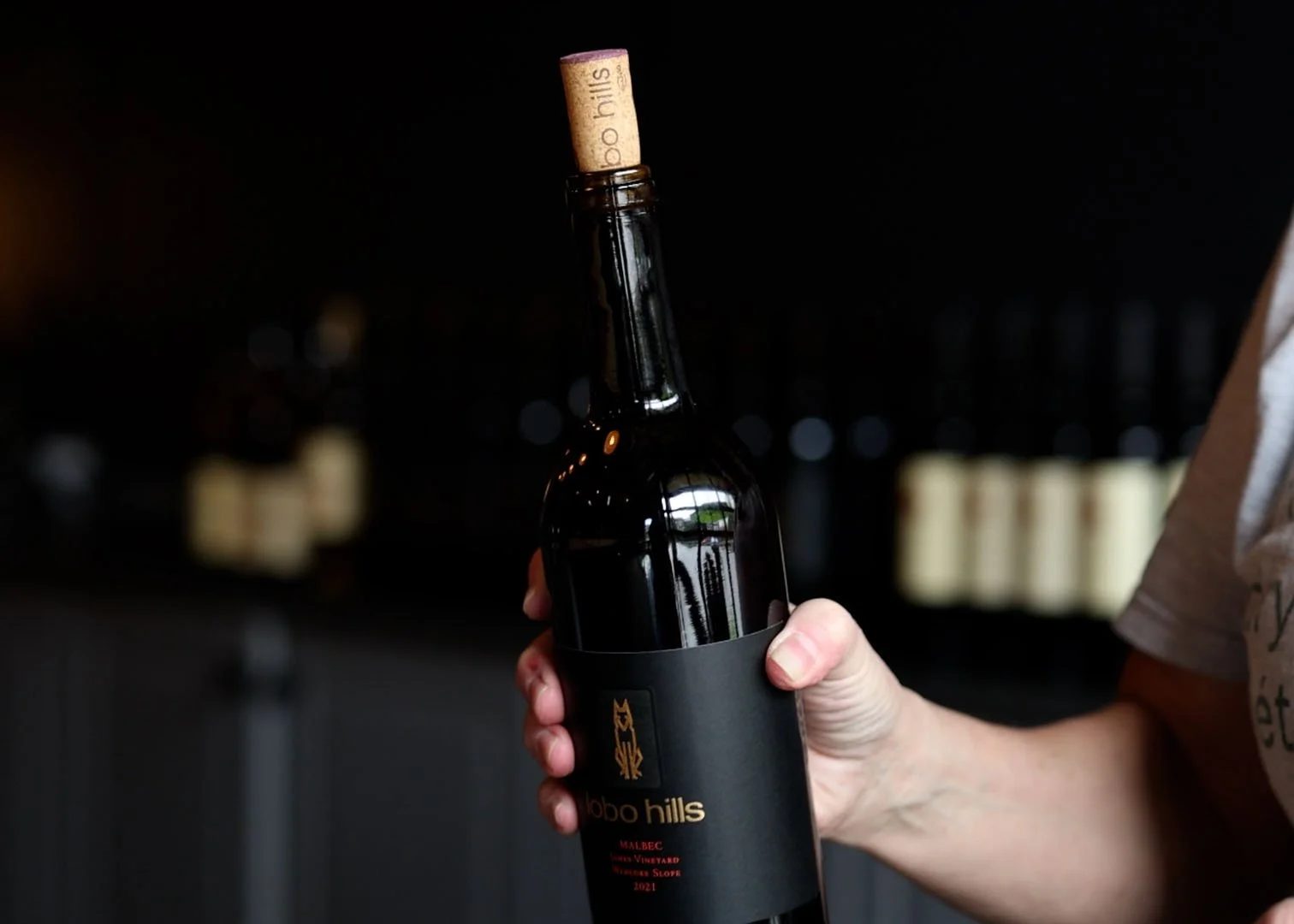
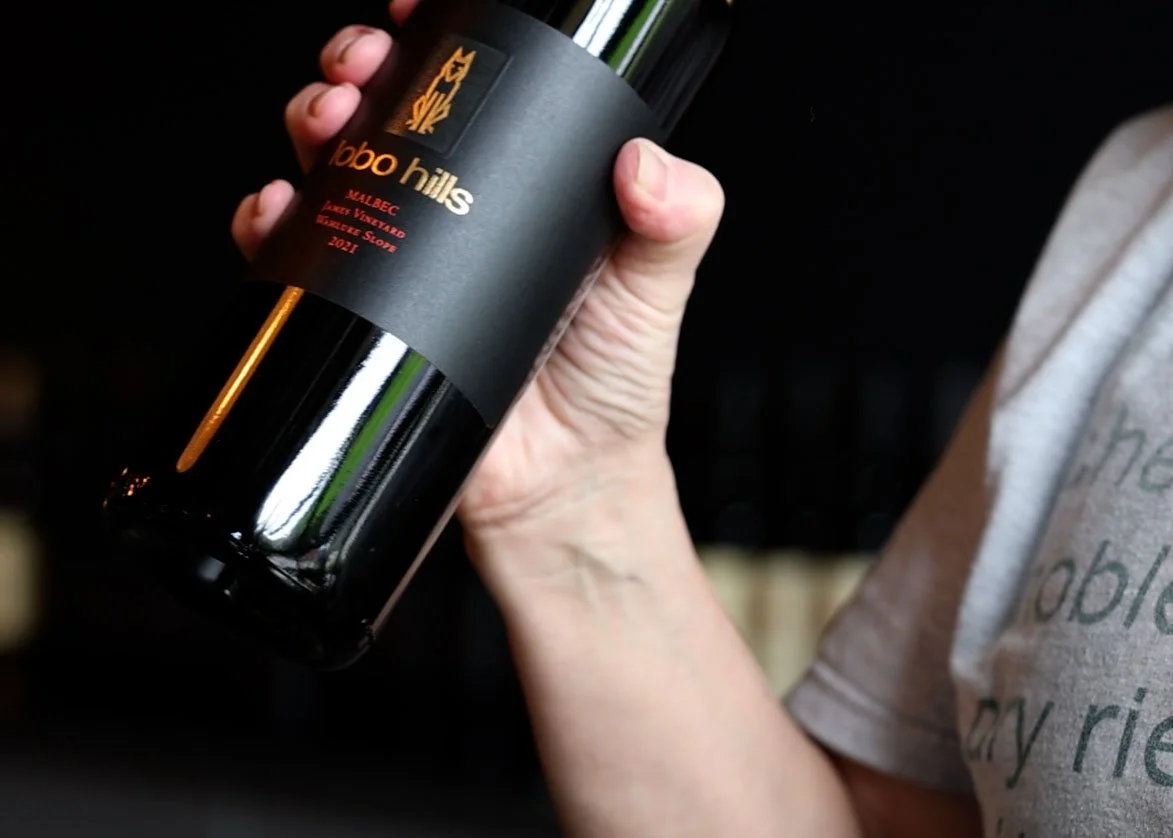
THE BOTTLE SHAKE: for wine that is in a bottle already open and has been sitting for a day (for those of you who may live alone and don’t finish a bottle), then here’s a trick that we have found can really wake up a wine. Hold the wine straight up, cork tight in the bottle, then give it a vigorous up and down shake. Get a lot of foam building up in the bottle. Remember, these little bubbles will wake up the wine, giving way to those wonderful aromas and flavors. And, that’s it. Nothing else needed, except pour into a glass and enjoy!
TIPS FROM WINE GEEKS
While we don’t like to get too heady about this decanting thing, there are some out there who spend a great deal of time tinkering with decanting methods and have some interesting things to say. The notes that follow are not written by me, but are a compilation of notes from others in the field. Happy reading!
To allow the “bouquet” to develop
This is a bit of a tricky one. Complex, ageworthy wines, in particular, can often really profit from a bit of time in a decanter – particularly if they are being drunk a little young. Very structured, complex wines will take some time to start to reveal their intricacy, and will continue to evolve over hours. But there is a risk, particularly when it comes to older wines. Sometimes particularly aged wines can be surprisingly delicate, and they will lose a lot of their precious aromas relatively quickly once the bottle has been opened. Decanting such treasures can lead to a rather disappointing experience, if done for too long – and too long is often not very long at all.
To permit “off” smells to dissipate
This is a classic reason to decant wines that have been bottled under screwcap: there is often a bit of an “off” odour when they are first opened resulting from the use of sulphur at the time of bottling. But this is by no means confined to screwcap wines; particularly in Germanic countries like Austria and Germany, sulphur continues to be used in abundance, and you notice it when you open a bottle. With a little air, the smell will dissipate. It will dissipate in your glass, too, however; a decanter is not necessary. But be aware: if that “off” odour is a wine defect such as cork taint or too much influence of brettanomyces (a strain of wild yeast that some people appreciate in small amounts, but which can quickly overpower a wine if found in larger doses), no amount of air is going to save it. You may as well open another bottle and start fresh.
Reasons NOT to decant
There are a couple of objective reasons that are worth considering otherwise:
The wine is made “ready to drink” off the shelf
This is, truly, a huge category of wine. Virtually any wine that you buy from a supermarket falls into this column. Most wines from specialty shops, too. In fact, some experts estimate that up to 95% of all wine produced is ready to drink the day it is bought.My point here is not that you shouldn’t decant so much as it is to say that decanting isn’t necessary. Again, personal taste needs to guide your decision. Most of these wines are relatively low-tannin and have moderate acidity, so the mellowing effect is superfluous. They will be filtered, so there is no sediment. The wines are meant to be drunk “on the fruit”, and so allowing them loads of air “to develop” isn’t going to bring very much benefit – although it very well may reduce the intensity of the fruit. I suppose, then, that if your goal is to actually reduce the overall intensity of the wine, then decanting would be a reasonable option.
The wine has been released by the producer when it is “ready”
There are two kinds of these:
First, wines from appellations where legislation dictates the wine must be held until “ready”. Rioja remains the biggest proponent of this system, with their “Reserva” and “Gran Reserva” bottlings. I do not mean to say that these wines cannot be decanted, but most of them certainly do not need to be. The development that they need will happen in your glass, and you would be well-advised to let that be the case. Very occasionally there are wines from Rioja or Ribera del Duero that could really use some decanting, but they are few and far between, in my opinion.
Second, there are the producers that don’t release until they feel their wines have entered the zone where they are ready to be consumed. Bless all producers who have the cellar capacity and the resources to hold on to a vintage until they feel it is ready to be released. These people are rare, and I love every single one of them. It is also most decidedly not the way things normally go; see: Bordeaux. By far, most ageworthy and high-quality wines are put on the market with the expectation that they will be cellared for years before being opened. This is as much a tragedy as it is a sad economic necessity for most producers.
A Note About Wine Aerators
Wine aerators exist for people who either don’t want to decant and drink a whole bottle of wine or don’t have the time to wait hours for it to develop in the decanter. There are several different kinds, but they all involve a large intake of air that is pulled through the wine as it is poured, thus aerating the wine. The point here is to speed the process up and to make it active – and there are people who take it to extremes. Some people even think it is a good idea to put their wine briefly into a blender to really aerate it. This technique is not recommended. But, you might consider an aerator based on the “Venturi” principle and made by a Danish company called Menu.
The main drawback of an aerator, after the questionable aesthetic value when serving wine at table to guests, is that, if you are planning on pouring more than one glass, the wine will either need to be filtered as you pour it or it will have to be free of sediment. The designs generally ignore the possibility that there is sediment in the bottle, and the fact that that sediment will be shaken up and mixed into the wine every time the bottle is tipped to pour.
If they work, they are very good for people who want one or two glasses of wine that need some air, but who don’t want to drink the whole bottle. Whether or not you want to deploy one at the dinner table with your guests is another question.
